



📖 Case Study
Imagine you’re planning a large event. Content for the event website needs to be created: stages, programmes, speaker profiles, sponsor logos, and much more. In parallel, you’re working on internal event planning and coordination with your technical team. The information required for the website is the same as that essential for internal organisation and technical implementation. You use a website builder system like WordPress, Webflow, or Squarespace to create your website.
🙄 Problem Description
Creating event websites with traditional systems often involves duplicate effort and carries a high risk of errors. You maintain the content for your website in one system and, in parallel, in internal planning tools such as Excel spreadsheets or project management software. The biggest sources of error and risks:
- Duplicate data entry: If a speaker’s name, a programme time, or a title changes, you have to manually update this change in at least two, often several, systems.
- Outdated information: It’s easy to lose track of which version of the data is the most current. This can lead to conflicting information on the website, in the internal plan, or in the instructions for the technical team.
- High communication effort: Every change must be communicated via email or phone call to team members, sponsors, or speakers, leading to long, confusing email chains and unnecessary stress.
- Limited reusability: The painstakingly created website content cannot be easily reused for internal planning or for stage directions on the event day.
⛈️ Impact
The consequences are serious: an enormous administrative burden that distracts you from creative tasks. A constant feeling of uncertainty as to whether the published information is truly up-to-date. This not only leads to internal misunderstandings but can also damage the trust of your speakers and sponsors and result in embarrassing errors on the event day. In short: you spend your time on tedious data management instead of focusing on the quality of your event.
🧠 Solution using iveo
This is where iveo comes in and makes the chaos a thing of the past, once and for all. With iveo, you create your event website and manage your event planning in one central location. All information – from speaker profiles to programme times and sponsor logos – is entered only once and is immediately available for all relevant areas.
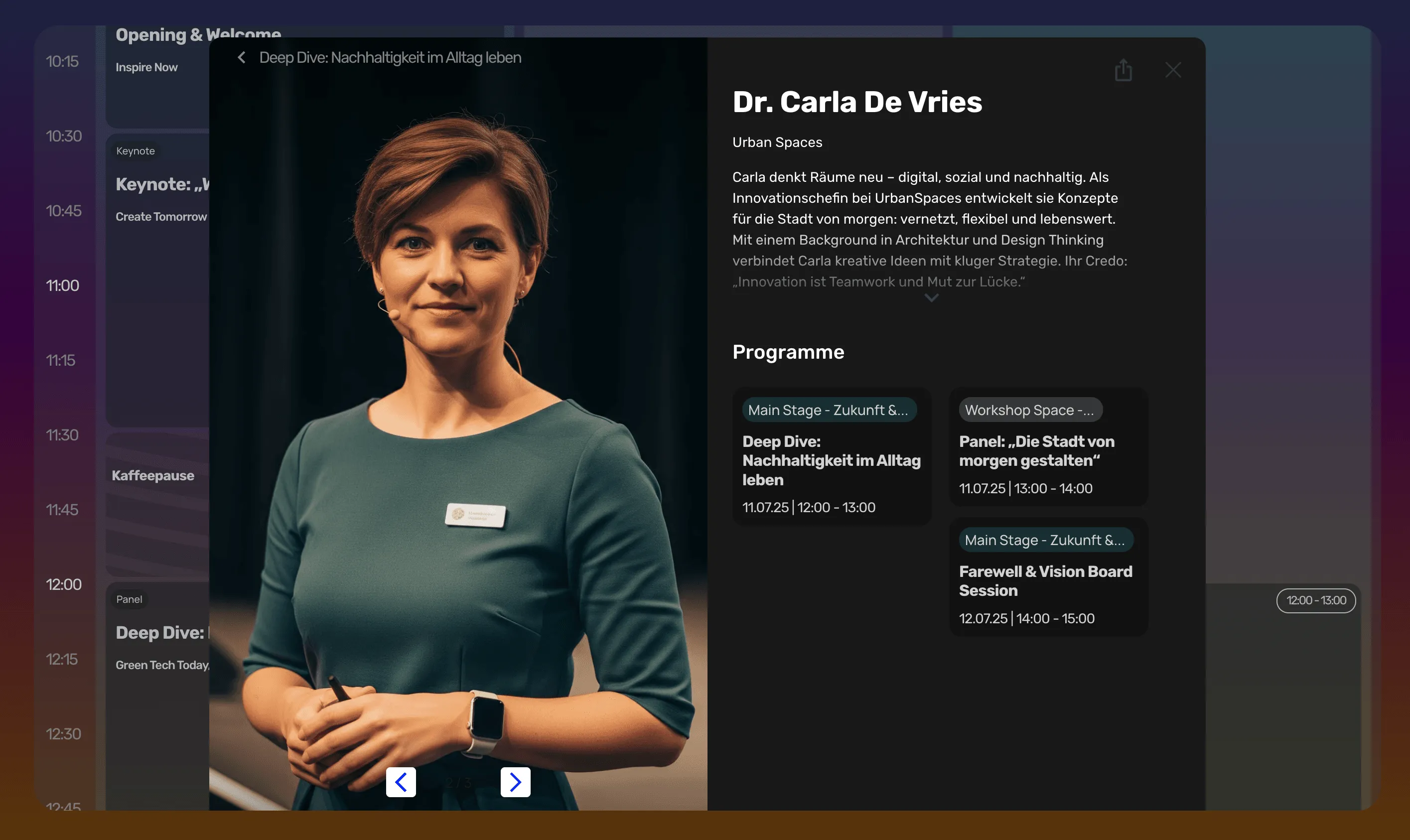
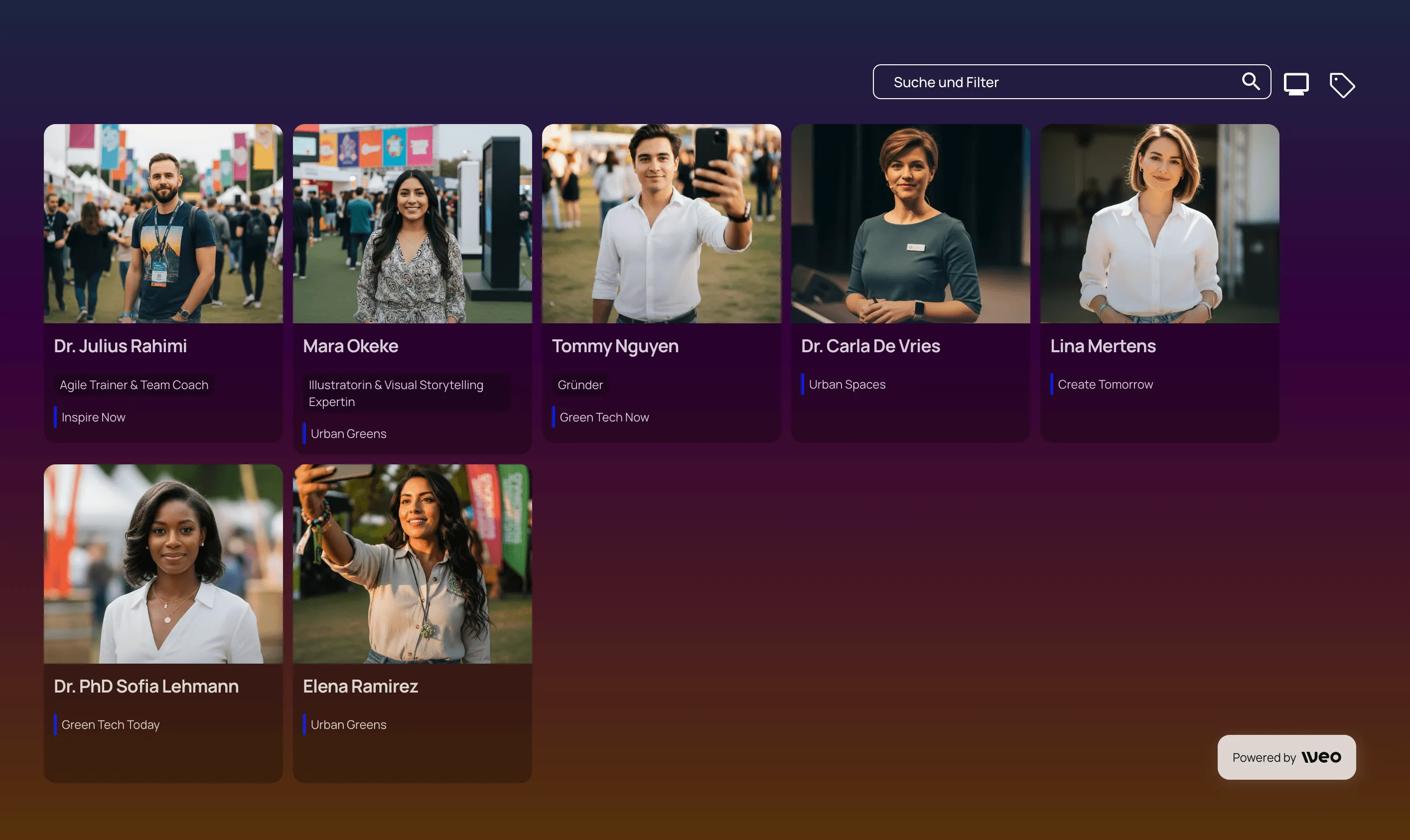
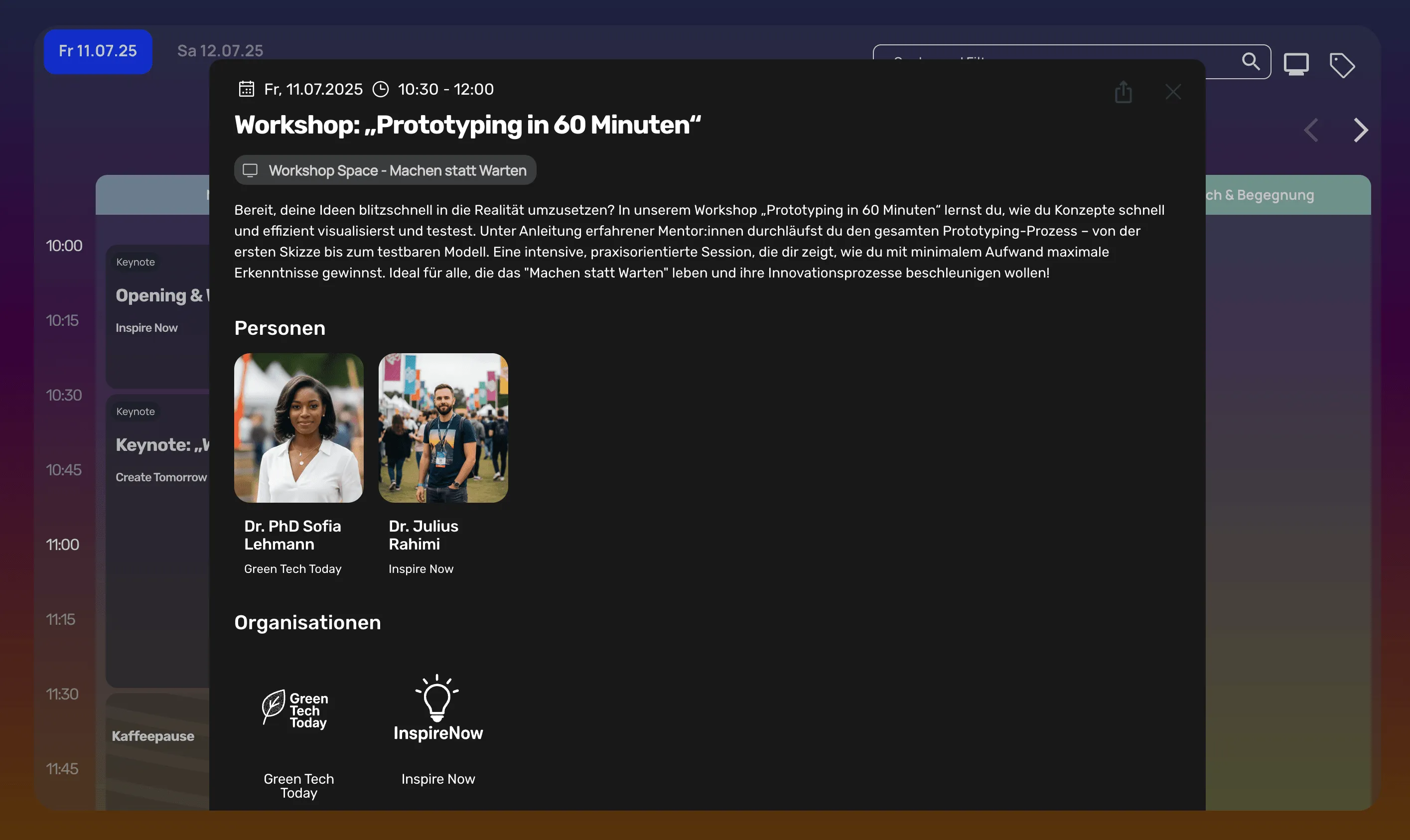
Find more information on the iveo Event Website.
Here’s how it works:
Central Database
In iveo, your event data such as speaker profiles, programme descriptions, organisations, and times are centrally stored. You use this database for both publishing on your website and for your internal planning.
Single Entry, Multiple Use
You maintain the content once and can then publish it on your website with a single click. The same data can also be used for event production and providing information to your technical team – in real-time.
Automatic Update
If something changes – be it the title of a presentation, the time, or a speaker’s profile picture – you only need to make the change in one place. iveo automatically updates the data everywhere: on your website, in your planning, and in the briefings for the technical team. This saves valuable time and eliminates sources of error.
Seamless Publication Process
iveo simplifies the publication process, allowing you to precisely control which content is published when. Manual copying via iFrame is a thing of the past.
With iveo, you not only save time and stress but also ensure transparent, efficient, and reliable collaboration with your team and external partners. You can once again focus on what matters most: creating an unforgettable event.