



📖 Case Study
As an agency or event organiser, you don’t just plan a single event, but a whole series of events – whether annual conferences, multi-day festivals, or an event series. Sustainability is becoming increasingly important, both in terms of environmental impact and the efficiency of your own work. You want to make your events more environmentally friendly while ensuring that the painstakingly collected data and content don’t simply end up in the digital bin after each event. Up to now, you’ve started planning each event almost from scratch, copying old Excel lists or creating new folder structures, which costs a lot of time and resources.
🙄 Problem Description
Traditional event management is often the opposite of sustainability. This starts with planning and continues through to production.
The Biggest Challenges:
Data Silos and Duplication of Work: With each new event, manual data entry starts from scratch. You repeatedly enter information about speakers, their biographies, presentations, and the organisations involved. This is not only inefficient but also prone to errors.
Lost Content: The valuable profiles of speakers, sponsor logos, and descriptions of past programmes get lost in old folders. You can’t simply reuse them because they’re not stored centrally.
High Resource Consumption: The constant printing of new plans, frantic email communication, and the additional administrative effort for coordinating new and old data not only burden your team but also the environment. Every unnecessary document and extra email has an ecological impact.
⛈️ Impact
The consequences are obvious: you’re trapped in a vicious cycle of inefficiency. Instead of optimising your events, you spend valuable time searching for old information and creating new data. This not only hinders your team’s productivity and creativity but also contradicts a sustainable event approach. Your event management becomes a one-way process that wastes resources instead of reusing them effectively.
🧠 Solution with iveo
iveo transforms your event management into a sustainable cycle. Our platform is not just a planning tool, but also a central knowledge base for your events. You no longer think only about the next event, but about a whole series of events.
How Sustainability Works with iveo:
Content Reuse: With iveo, you store speakers, organisations, programmes, and entire events centrally. For your next event, you can simply access this data and reuse it with a few clicks, instead of creating it anew. This not only saves time but also valuable resources.
One Database, Many Events: Your event data is retained and available for planning future events. You no longer have to maintain information twice or search for it in old files.
Resource-Saving Processes: Since all information is updated digitally, centrally, and in real-time, there’s no need to print plans or manage extensive email chains. This not only reduces stress but also the ecological footprint of your event. With iveo, sustainability in event management becomes tangible – practical reuse that really works. The platform helps you work more efficiently, conserve resources, and simultaneously create high-quality, unforgettable events. This way, you reclaim time to focus on what truly matters: the positive impact of your event.
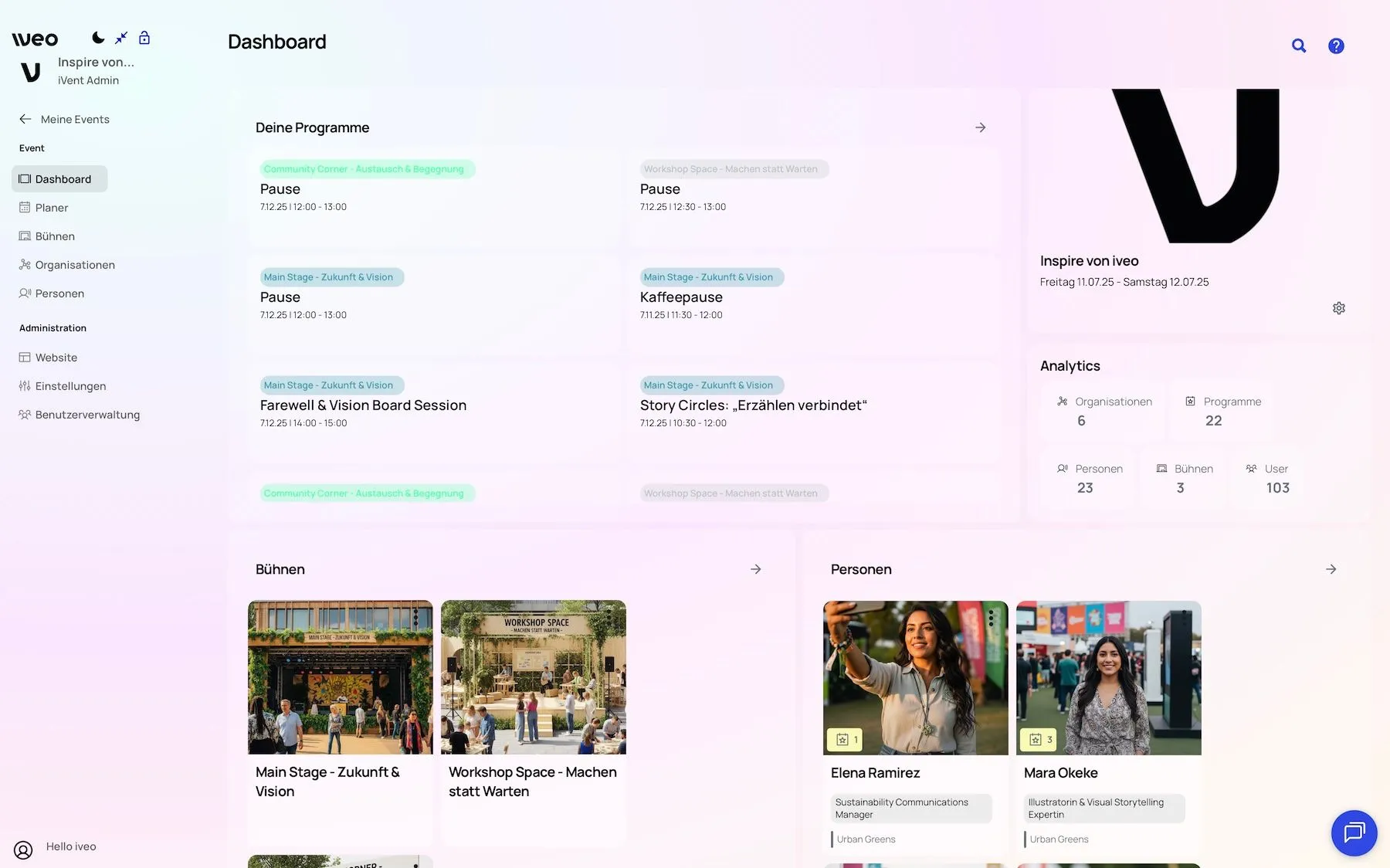
The dashboard provides a clear overview of current information.
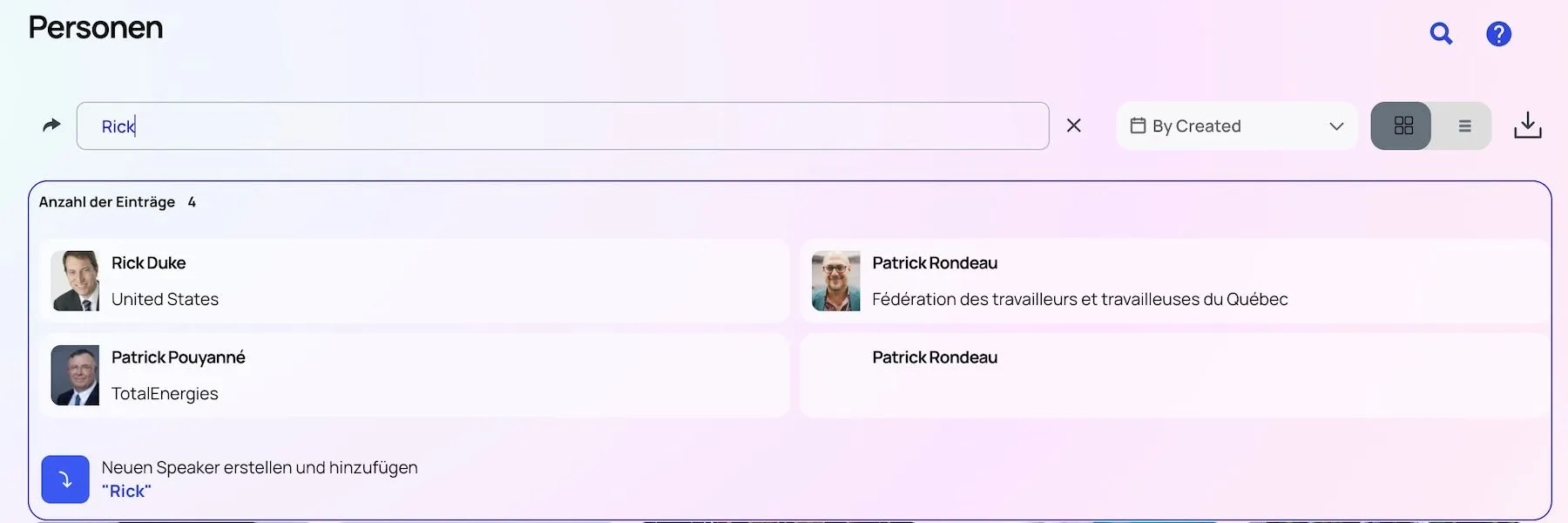
Before creating any people (or organisations), a search ensures that no duplicates are created.